Report Adverse Event or Product Quality Complaint   US Site   Global Site             

Header Logo
  • Prescribing Information
  • Therapy areas
    • All Therapeutic Areas
    • Cardiovascular, Renal and Metabolism
    • Immunology
    • Infection
    • Oncology
    • Rare Disease (Alexion)
    • Respiratory
  • Disease Education
  • Resources
    • Congress Library
    • Clinical Trials
    • Continuing Education
    • Patient Support
    • Pipeline
  • Connect
    • Connect with an MSL
    • Connect with an MSL
    • Submit an MIR
    • Give Feedback

Search Medical Information

Login

Request a field medical follow-up

  • Home
  • Disease Education
  • Eosinophilic Granulomatosis with Polyangiitis (EGPA)

Eosinophilic Granulomatosis with Polyangiitis (EGPA)

  1. Eosinophils in EGPA
  2. Diagnosis & Clinical Presentation
  3. Unmet Need in EGPA Management
  4. Connect with Us

AstraZeneca Medical's ambition is to address unmet needs for people living with inflammatory diseases driven by eosinophilic inflammation.

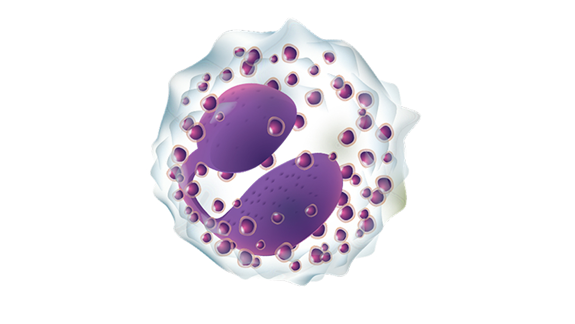
Watch Eosinophils in Action in EGPA

What is EGPA?

EGPA is a complex, rare, multisystem disease characterized by necrotizing vasculitis and eosinophilic inflammation, which is associated with adult-onset asthma and nasal polyps.1-3 The US incidence rate is estimated at 1 to 3 cases per 100,000 adults per year.4


EGPA is the rarest subgroup among the AAVs, although the majority of patients with EGPA are ANCA negative.1,2

Characteristics of the 3 Diseases of AAV

 AAV Diseases Key clinical manifestations1-3,5,6 ANCA positivity2,7,a
EGPA
  • Asthma, eosinophilia, and nasal polyps are commonb
  • Necrotizing vasculitis of small to medium-sized blood vessels and eosinophilic granulomatous inflammation
30-47%
MPA
  • Necrotizing arteritis involving small and medium arteries may be present
  • Necrotizing glomerulonephritis is very common
  • Inflammation that is not centered on vessels, including granulomatous inflammation, is absent
  • Skin involvement is common
70-90%

GPA

  • Necrotizing glomerulonephritis and granulomatous and non-granulomatous extravascular inflammation are very common
  • Nasal crusting, stuffiness and bleeding, and eye involvement are common
70-90%

aANCA are autoantibodies directed against antigens found in the cytoplasmic granules of neutrophils and monocytes; bThese characteristics are rare in MPA and GPA.

What are Eosinophils?

Eosinophils are terminally differentiated granulocytes that have a role in inflammation and tissue injury in multiple diseases and across many organ systems.8-10


Eosinophils can have reciprocal interactions with other immune cells to perpetuate chronic inflammation.8,10 They exert inflammatory effects by releasing cytotoxic granules (eg, EDN, ECP, EPO, MBP), extracellular traps, and lipid body inflammatory mediators.10

Eosinophils contribute to inflammation both directly and indirectly3

Cytotoxicity and Microenvironment Manipulation

Eosinophils can produce diverse cytotoxic proteins that cause organ damage through direct cytotoxic effects.11

Eosinophils produce thrombin and can induce a prothrombotic environment.

Chronic Inflammation

Eosinophils can drive cytotoxicity by interacting with other inflammatory cell types to perpetuate chronic inflammation.11

Ischemic Damage

Eosinophils may contribute to ischemic damage via inflammation and thrombosis, irrespective of ANCA status.3,8,12

Eosinophils Are Involved in All Phases of EGPA 

These phases may not appear in every patient, may not appear in a defined order, or may partially overlap.7,13

Prodromal

Characteristics

  • Severe adult-onset asthma7,13
  • Upper respiratory symptomsa
  • Non-specific symptomsb

Role of Eosinophils

  • Increased numbers of eosinophils contribute to respiratory and ENT manifestations3

Eosinophilic Infiltrative

Characteristics

  • Peripheral blood eosinophilia13,14,c
  • Tissue eosinophilia, particularly in the lungs, heart, and GI system

Role of Eosinophils

  • Eosinophilic infiltration contributes to organ damage3

Vasculitic

Characteristics

  • Systemic blood vessel vasculitis with granulomatous inflammation13,14

Role of Eosinophils

  • Eosinophilic vasculitis of small arteries and veins3
  • Extravascular eosinophilic granulomas contribute to organ damage

aSuch as allergic rhinitis and nasal polyps.

bIncluding malaise, fever, migrating polyarthralgia, and weight loss.

cTypically defined as 5.0-9.0 x 10⁹/L.

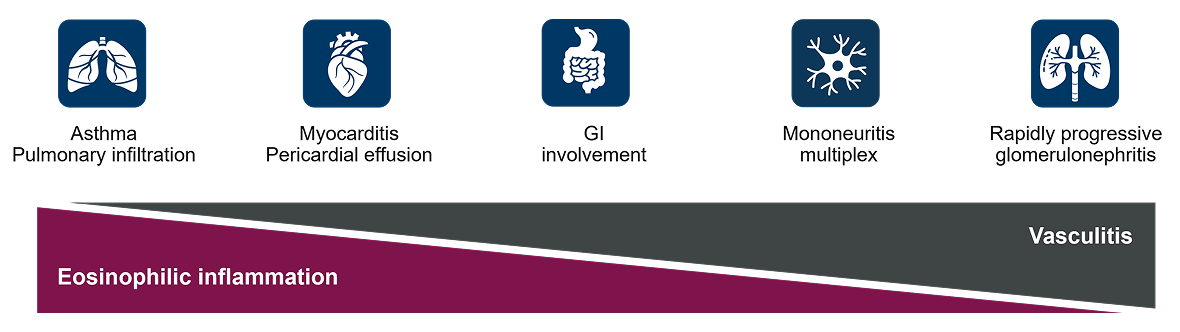
Spectrum of Clinical Manifestations of EGPA

Although EGPA has historically been segregated into 2 distinct phenotypes based on the underlying pathophysiological mechanisms, it may present as a spectrum of disease phenotypes with overlapping pathological mechanisms that cannot be defined by a single serological or clinical parameter.7,11

Note: Mononeuritis multiplex is a form of peripheral neuropathy, involving damage to at least 2 different areas of the peripheral nervous system.

AAV antineutrophil cytoplasmic antibody-associated vasculitis
ANCA antineutrophil cytoplasmic antibody
ECP eosinophilic cationic protein
EDN eosinophil-derived neurotoxin
EGPA eosinophilic granulomatosis with polyangiitis
ENT ear, nose, and throat
EPO eosinophil peroxidase
GI gastrointestinal
GPA granulomatosis with polyangiitis
ILC2 type 2 innate lymphoid cell(s)
MBP major basic protein
MPA microscopic polyangiitis
US United States

1. Jennette JC, Falk RJ, Bacon PA, et al. 2012 revised International Chapel Hill Consensus Conference nomenclature of vasculitides. Arthritis Rheum. 2013;65(1):1-11. doi:10.1002/art.37715


2. Furuta S, Iwamoto T, Nakajima H. Update on eosinophilic granulomatosis with polyangiitis. Allergol Int. 2019;68(4):430-436. doi:10.1016/j.alit.2019.06.004


3. Khoury P, Grayson PC, Klion AD. Eosinophils in vasculitis: characteristics and roles in pathogenesis. Nat Rev Rheumatol. 2014;10(8):474-483. doi:10.1038/nrrheum.2014.98


4. Vasculitis Foundation. Pediatric vasculitis. Who gets EGPA? Vasculitis Foundation website. Accessed February 11, 2026. https://www.vasculitisfoundation.org/pediatrics-vasculitis/pediatric-types/pediatric-eosinophilic-granulomatosis-with-polyangiitis/


5. Yates M, Watts R. ANCA-associated vasculitis. Clin Med (Lond). 2017;17(1):60-64. doi:10.7861/clinmedicine.17-1-60


6. Chung SA, Seo P. Microscopic polyangiitis. Rheum Dis Clin North Am. 2010;36(3):545-558. doi:10.1016/j.rdc.2010.04.003


7. Trivioli G, Terrier B, Vaglio A. Eosinophilic granulomatosis with polyangiitis: understanding the disease and its management. Rheumatology (Oxford). 2020;59(suppl 3):iii84-iii94. doi:10.1093/rheumatology/kez570


8. Ramirez GA, Yacoub MR, Ripa M, et al. Eosinophils from physiology to disease: a comprehensive review. BioMed Res Int. 2018;2018:9095275. doi:10.1155/2018/9095275


9. Rosenberg HF, Dyer KD, Foster PS. Eosinophils: changing perspectives in health and disease. Nat Rev Immunol. 2013;13(1):9-22. doi:10.1038/nri3341


10. Jacobsen EA, Jackson DJ, Heffler E, et al. Eosinophilic knockout humans: uncovering the role of eosinophils through eosinophil-directed biologic therapies. Annu Rev Immunol. 2021;39:719-757. doi:10.1146/annurev-immunol-093019-125918


11. Fagni F, Bello F, Emmi G. Eosinophilic granulomatosis with polyangiitis: dissecting the pathophysiology. Front Med (Lausanne). 2021;8:627776. doi:10.3389/fmed.2021.627776


12. Koike H, Nishi R, Furukawa S, et al. In vivo visualization of eosinophil secretion in eosinophilic granulomatosis with polyangiitis: an ultrastructural study. Allergol Int. 2022;71(3):373-382. doi:10.1016/j.alit.2022.02.009


13. Chakraborty RK, Aeddula NR. Eosinophilic granulomatosis with polyangiitis (Churg-Strauss syndrome). In: StatPearls [Internet]. StatPearls Publishing; March 23, 2023.


14. Gioffredi A, Maritati F, Oliva E, et al. Eosinophilic granulomatosis with polyangiitis: an overview. Front Immunol. 2014;5:549. doi:10.3389/fimmu.2014.00549

AstraZeneca Medical's ambition is to address unmet needs for people living with inflammatory diseases driven by eosinophilic inflammation.

Diagnosis of EGPA Is a Complex Clinical Challenge 

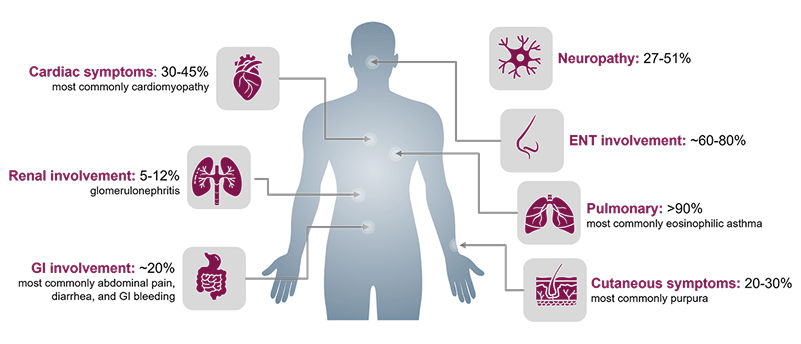
Patients can experience a variety of manifestations that impact multiple organ systems simultaneously.1-3

Proportion of EGPA patients with clinical signs/symptoms1-4

Proportion of EGPA patients with clinical signs/symptoms

Most Common EGPA Manifestations

Eosinophilic Asthma

In most cases of EGPA, asthma is the first disease manifestation with >90% of patients having eosinophilic asthma. Asthma precedes the onset of systemic disease by a mean of 12 years.2-4


Eosinophilic asthma in EGPA is classically severe, adult onset, and OCS dependent. At the time of diagnosis, the majority of patients with EGPA have severe asthma.3,5

ENT Involvement

About 60 to 80% of patients with EGPA experience ENT manifestations. These manifestations typically emerge during the early phases of the disease.4,6,7

Delayed and Missed Diagnoses

There are no commonly accepted diagnostic criteria for EGPA, and there is a lack of definitive biomarkers for EGPA.2,8,9 These may factor into the frequent delayed or missed diagnoses as mean time from symptom onset to diagnosis is 12 years.2,3

Common Differential Diagnoses Should Be Ruled Out

Symptomatic overlap with other diseases, including other forms of AAV, HES, and infection, can suggest that differential diagnoses need to be considered.2,10,11

Other Forms of AAV

EGPA is distinct from MPA and GPA in that it is characterized by eosinophilia, asthma, and nasal polyps.2,12


HES

The distinction between EGPA and HES is challenging as both conditions are characterized by eosinophilia and widespread organ involvement.2,10


Patients with HES usually do not have asthma or vasculitic complications, and they are ANCA negative.10

Infection and Other Exposures

Helminthic infections should be ruled out, particularly in patients with GI involvement.


Eosinophilia and respiratory symptoms are major features of allergic bronchopulmonary aspergillosis and eosinophilic pneumonia.2

Assessment Tools of EGPA

  • The BVAS is used to assess disease activity in EGPA, and it is often used to assess disease remission.
  • The BVAS (version 3) is currently used for the assessment of systemic vasculitis.13,14
  • Importantly, items of disease activity should only be recorded in the BVAS if they have been active in the previous 4 weeks and are directly attributed to active vasculitis.
  • Activity attributed to comorbidities or infection, or induced by treatment, is not recorded on the BVAS.

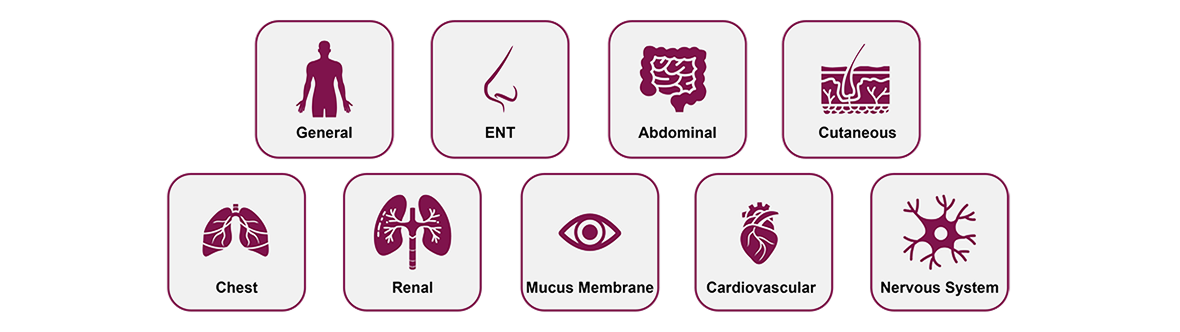
The 9 organ-based systems measured by the BVAS14

The 9 organ-based systems measured by the BVAS

  • The VDI is an assessment of longitudinal organ damage in EGPA14,15
  • The VDI includes 64 items of damage, grouped into 11 organ systems14,15
  • The VDI records organ damage that has accrued since the onset of vasculitis; it requires that disease manifestations be present for at least 3 months before being scored as damage rather than ongoing activity14,15
  • Use of the VDI in patients with vasculitis has shown that the accumulation of damage is bimodal, with an earlier phase due to vasculitis and a later phase due to treatment-related toxicity14

  • The FFS is a tool used to assess (a) a patient's prognosis according to clinical and biologic parameters and (b) the severity of the manifestations at the time of diagnosis16
  • The FFS assesses 5 parameters, each of which is associated with an increased risk of death
  • These parameters include proteinuria, renal insufficiency, cardiomyopathy, severe GI manifestations, and CNS involvement16,a
  • It is important to note that the parameters included in the FFS are based on their assessed impact on patient survival. The impact on function and QoL is not considered16
  • The FFS does not assess vasculitis evolution or organ damage16

aAlthough the original 1996 FFS remains the most commonly used prognostic assessment, in 2011, the parameters of the FFS were re-evaluated in a larger cohort of patients, including 230 patients with EGPA. The revised 2011 FFS comprises 4 factors associated with a poorer prognosis (scored +1) and 1 factor associated with better outcomes (scored −1): age ≥65 years, cardiac insufficiency, renal insufficiency, severe GI manifestations (each scored +1), and ENT manifestations (scored -1).

Organ Damage Is Frequent in Patients with EGPA 

  • Organ damage accumulates over time in patients with EGPA.1
  • Age, duration of OCS use, and prior relapse are associated with worse organ damage in patients with EGPA, as evidenced by higher VDI scores.1
  • Organ damage substantially contributes to disease burden and mortality in patients with EGPA, as reflected by higher FFS.1,16
    • For example, patients with EGPA and cardiac insufficiency have a significantly increased risk of mortality (HR, 2.8; 95% CI, 1.2-5.9; p=0.02).

The most commonly reported manifestations of organ damage in patients with EGPA1,a

The most commonly reported manifestations of organ damage in patients with EGPA

aVDI items present after at least 1 year of follow-up after diagnosis in a longitudinal cohort study (n=268).

AAV antineutrophil cytoplasmic antibody-associated vasculitis
ANCA antineutrophil cytoplasmic antibody
BVAS Birmingham Vasculitis Activity Score
CI confidence interval
BR bendamustine +rituximab
EGPA eosinophilic granulomatosis with polyangiitis
ENT ear, nose, and throat
FFS Five Factor Score
GI gastrointestinal
GPA granulomatosis with polyangiitis 
HES hypereosinophilic syndrome
HR hazard ratio
MPA microscopic polyangiitis
OCS oral corticosteroid(s)
QoL quality of life
VDI Vasculitis Damage Index

1. Doubelt I, Cuthbertson D, Carette S, et al. Clinical manifestations and long-term outcomes of eosinophilic granulomatosis with polyangiitis in North America. ACR Open Rheumatol. 2021;3(6):404-412. doi:10.1002/acr2.11263


2. Trivioli G, Terrier B, Vaglio A. Eosinophilic granulomatosis with polyangiitis: understanding the disease and its management. Rheumatology (Oxford). 2020;59(suppl 3):iii84-iii94. doi:10.1093/rheumatology/kez570


3. Cottin V, Bel E, Bottero P, et al. Respiratory manifestations of eosinophilic granulomatosis with polyangiitis (Churg-Strauss). Eur Respir J. 2016;48(5):1429-1441. doi:10.1183/13993003.00097-2016


4. Emmi G, Bettiol A, Gelain E, et al. Evidence-based guideline for the diagnosis and management of eosinophilic granulomatosis with polyangiitis. Nat Rev Rheumatol. 2023;19(6):378-393. doi:10.1038/s41584-023-00958-w


5. Khoury P, Grayson PC, Klion AD. Eosinophils in vasculitis: characteristics and roles in pathogenesis. Nat Rev Rheumatol. 2014;10(8):474-483. doi:10.1038/nrrheum.2014.98


6. Baldwin C, Wolter NE, Pagnoux C. Ear, nose, and throat involvement in eosinophilic granulomatosis with polyangiitis. Adv Cell Mol Otolaryngol. 2015;3(1):27181. doi:10.3402/acmo.v3.27181


7. Srouji I, Lund V, Andrews P, et al. Rhinologic symptoms and quality-of-life in patients with Churg-Strauss syndrome vasculitis. Am J Rhinol. 2008;22(4):406-409. doi:10.2500/ajr.2008.22.3204


8. Grayson PC, Ponte C, Suppiah R, et al. 2022 American College of Rheumatology/European Alliance of Associations for Rheumatology classification criteria for eosinophilic granulomatosis with polyangiitis. Ann Rheum Dis. 2022;81(3):309-314. doi:10.1136/annrheumdis-2021-221794


9. Jennette JC, Falk RJ, Bacon PA, et al. 2012 revised International Chapel Hill Consensus Conference nomenclature of vasculitides. Arthritis Rheum. 2013;65(1):1-11. doi:10.1002/art.37715


10. Gioffredi A, Maritati F, Oliva E, et al. Eosinophilic granulomatosis with polyangiitis: an overview. Front Immunol. 2014;5:549. doi:10.3389/fimmu.2014.00549


11. Jackson DJ, Akuthota P, Roufosse F. Eosinophils and eosinophilic immune dysfunction in health and disease. Eur Respir Rev. 2022;31(163):210150. doi:10.1183/16000617.0150-2021


12. Yates M, Watts R. ANCA-associated vasculitis. Clin Med (Lond). 2017;17(1):60-64. doi:10.7861/clinmedicine.17-1-60


13. Mukhtyar C, Lee R, Brown D, et al. Modification and validation of the Birmingham Vasculitis Activity Score (version 3). Ann Rheum Dis. 2009;68(12):1827-1832. doi:10.1136/ard.2008.101279


14. Flossmann O, Bacon P, de Groot K, et al. Development of comprehensive disease assessment in systemic vasculitis. Ann Rheum Dis. 2007;66(3):283-292. doi:10.1136/ard.2005.051078


15. Exley AR, Bacon PA, Luqmani RA, et al. Development and initial validation of the Vasculitis Damage Index for the standardized clinical assessment of damage in the systemic vasculitides. Arthritis Rheum. 1997;40(2):371-380. doi:10.1002/art.1780400222


16. Guillevin L, Pagnoux C, Seror R, et al. The Five-Factor Score revisited: assessment of prognoses of systemic necrotizing vasculitides based on the French Vasculitis Study Group (FVSG) cohort. Medicine (Baltimore). 2011;90(1):19-27. doi:10.1097/MD.0b013e318205a4c6

AstraZeneca Medical's ambition is to address unmet needs for people living with inflammatory diseases driven by eosinophilic inflammation.

Managing EGPA

There is an unmet need for earlier, optimized management of EGPA.1-6


EGPA treatment considerations include controlling inflammation, achieving long-term remissiona, and preventing disease relapse, while minimizing dose- and drug-related toxicity.

Eosinophilic Inflammation Is a Defining Feature of EGPA7,8

GOAL: Reduce eosinophilic inflammation

EGPA Is a Chronic Condition9,10

GOAL: Achieve long-term remission, using well-tolerated treatments, with minimal drug toxicitya

Disease Relapse Is Common11,12

GOAL: Prevent disease relapse, particularly during steroid tapering

aNote that definitions for remission vary between established guidelines and clinical trials.


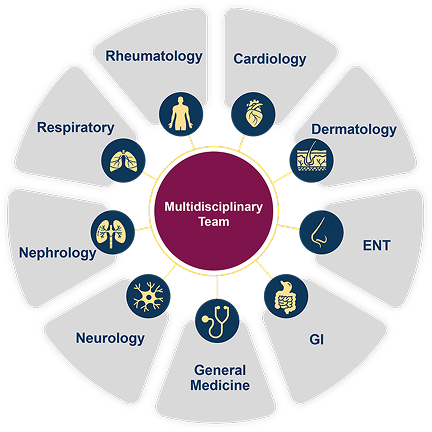
Early Collaboration Can Help Optimize Disease Management

EGPA is most frequently diagnosed by rheumatologists and pulmonologists13; however, other disciplines may also be involved in diagnosis.5,14,15 Early collaboration can help optimize disease management to enhance outcomes for patients.4

The 2022 EULAR guidelines deem multidisciplinary management by specialist centers with expertise in vasculitis a fundamental principle for the management of EGPA.4

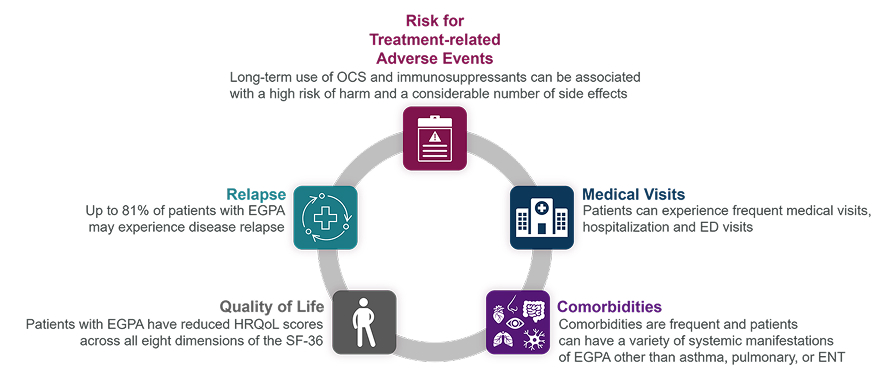
Patients with EGPA experience substantial disease burden1-3,9,16

Treatment Strategies

OCS and Non-Specific Immunosuppressants

High-dose OCS therapy is a cornerstone of treatment for EGPA, while non-specific immunosuppressants are used to induce and/or maintain remission.

Most patients are prescribed OCS and receive them long term.3,4,17

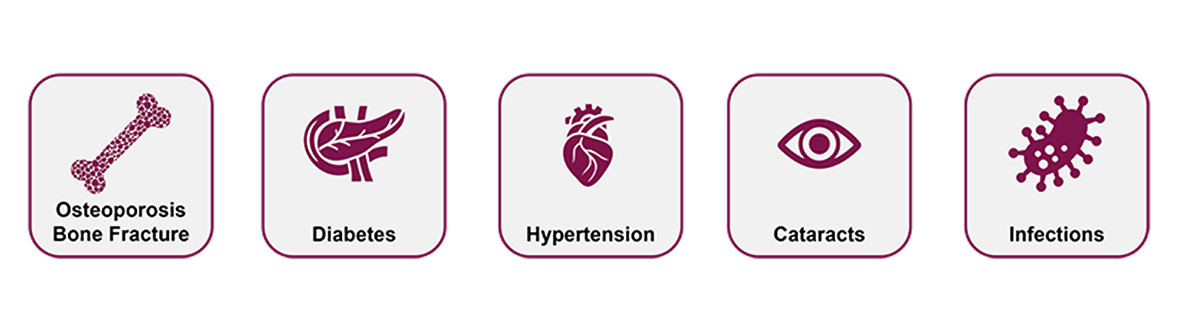
Adverse events that may be associated with long-term use of OCS18-20
Adverse Effects
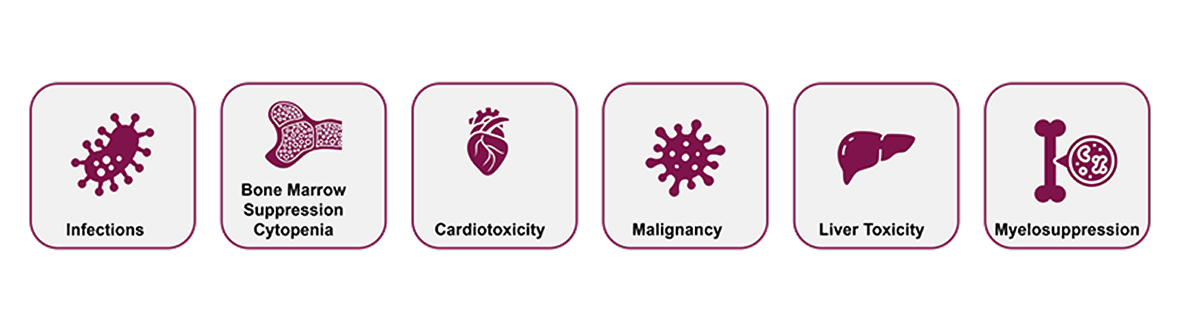
Adverse events typically associated with long-term use of non-specific immunosuppressants21,22
Adverse Effects

OCS and immunosuppressants can be associated with a risk of side effects to patients, and the disease frequently remains uncontrolled. To prevent or reduce toxicity, it is recommended to taper OCS dose once remission has been achieved; however, disease relapse is common during tapering.3,4,11

Advances in Therapy

Advances in the understanding of EGPA pathophysiology have led to additional treatment approaches. Biologics targeting eosinophils are an emerging treatment strategy.14

Treatment Algorithms for EGPA

EGPA treatment is individualized based on disease severity and organ involvement. Given the heterogeneity of EGPA and evolving evidence base, clinicians are encouraged to consult the full ACR/Vasculitis Foundation guidelines for further information.3

ACR American College of Rheumatology
ED emergency department
ENT ear, nose, and throat
EULAR European Alliance of Associations for Rheumatology
GI gastrointestinal
HRQoL health-related quality of life
OCS oral corticosteroid(s)
SF-36 36-item short form health survey

1. Jackson DJ, Akuthota P, Roufosse F. Eosinophils and eosinophilic immune dysfunction in health and disease. Eur Respir Rev. 2022;31(163):210150. doi:10.1183/16000617.0150-2021


2. Jakes RW, Kwon N, Nordstrom B, et al. Burden of illness associated with eosinophilic granulomatosis with polyangiitis: a systematic literature review and meta-analysis. Clin Rheumatol. 2021;40(12):4829-4836. doi:10.1007/s10067-021-05783-8


3. Chung SA, Langford CA, Maz M, et al. 2021 American College of Rheumatology/Vasculitis Foundation guideline for the management of antineutrophil cytoplasmic antibody-associated vasculitis. Arthritis Rheumatol. 2021;73(8):1366-1383. doi:10.1002/art.41773


4. Hellmich B, Sanchez-Alamo B, Schirmer JH, et al. EULAR recommendations for the management of ANCA-associated vasculitis: 2022 update. Ann Rheum Dis. 2024;83(1):30-47. doi:10.1136/ard-2022-223764


5. Bloom JL, Langford CA, Wechsler ME. Therapeutic advances in eosinophilic granulomatosis with polyangiitis. Rheum Dis Clin North Am. 2023;49(3):563-584. doi:10.1016/j.rdc.2023.03.006


6. Yates M, Watts R. ANCA-associated vasculitis. Clin Med (Lond). 2017;17(1):60-64. doi:10.7861/clinmedicine.17-1-60


7. Jennette JC, Falk RJ, Bacon PA, et al. 2012 revised International Chapel Hill Consensus Conference nomenclature of vasculitides. Arthritis Rheum. 2013;65(1):1-11. doi:10.1002/art.37715


8. Fagni F, Bello F, Emmi G. Eosinophilic granulomatosis with polyangiitis: dissecting the pathophysiology. Front Med (Lausanne). 2021;8:627776. doi:10.3389/fmed.2021.627776


9. Sokołowska B, Szczeklik W, Piłat O, et al. The impact of current health-related quality of life on future health outlook in patients with eosinophilic granulomatosis with polyangiitis (Churg-Strauss syndrome). Clin Rheumatol. 2013;32(6):779-785. doi:10.1007/s10067-013-2169-7


10. Benarous L, Terrier B, Laborde-Casterot H, et al. Employment, work disability and quality of life in patients with ANCA-associated vasculitides. The EXPOVAS study. Clin Exp Rheumatol. 2017;35(suppl 103):40-46.


11. Ribi C, Cohen P, Pagnoux C, et al. Treatment of Churg-Strauss syndrome without poor-prognosis factors: a multicenter, prospective, randomized, open-label study of seventy-two patients. Arthritis Rheum. 2008;58(2):586-594. doi:10.1002/art.23198


12. Yates M, Watts RA, Bajema IM, et al. EULAR/ERA-EDTA recommendations for the management of ANCA-associated vasculitis. Ann Rheum Dis. 2016;75(9):1583-1594. doi:10.1136/annrheumdis-2016-209133


13. Chen LF, Qianhua LI, Zheng DH, et al. Comparison of clinical characteristics of eosinophilic granulomatosis with polyangiitis between rheumatology and respiratory medicine: a single center, retrospective study [abstract]. Ann Rheum Dis. 2019;78(suppl 2):1751-1752. Abs AB0579. doi:10.1136/annrheumdis-2019-eular.5369


14. Emmi G, Bettiol A, Gelain E, et al. Evidence-based guideline for the diagnosis and management of eosinophilic granulomatosis with polyangiitis. Nat Rev Rheumatol. 2023;19(6):378-393. doi:10.1038/s41584-023-00958-w


15. Vasculitis Foundation. Pediatric vasculitis. Who gets EGPA? Vasculitis Foundation website. Accessed February 11, 2026. https://www.vasculitisfoundation.org/pediatrics-vasculitis/pediatric-types/pediatric-eosinophilic-granulomatosis-with-polyangiitis/


16. Cottin V, Bel E, Bottero P, et al. Respiratory manifestations of eosinophilic granulomatosis with polyangiitis (Churg-Strauss). Eur Respir J. 2016;48(5):1429-1441. doi:10.1183/13993003.00097-2016


17. Jakes R, Kwon N, Huynh L, et al. Characterisation and burden of eosinophilic granulomatosis with polyangiitis: a European retrospective study [abstract]. Eur Respir J. 2022;60(suppl 66):2254. doi:10.1183/13993003.congress-2022.2254


18. Rice JB, White AG, Scarpati LM, et al. Long-term systemic corticosteroid exposure: a systematic literature review. Clin Ther. 2017;39(11):2216-2229. doi:10.1016/j.clinthera.2017.09.011


19. Baldini C, Talarico R, Della Rossa A, et al. Clinical manifestations and treatment of Churg-Strauss syndrome. Rheum Dis Clin North Am. 2010;36(3):527-543. doi:10.1016/j.rdc.2010.05.003


20. Scherbacher PJ, Hellmich B, Feng Y-S, et al. Prospective study of complications and sequelae of glucocorticoid therapy in ANCA-associated vasculitis. RMD Open. 2024;10(1):e003956. doi:10.1136/rmdopen-2023-003956


21. Alam V, Nanzer AM. Eosinophilic granulomatosis with polyangiitis: case report and literature review. Breathe (Sheff). 2022;18(4):220170. doi:10.1183/20734735.0170-2022


22. Hsu DC, Katelaris CH. Long-term management of patients taking immunosuppressive drugs. Aust Prescr. 2009;32(3):68-71. doi:10.18773/austprescr.2009.035

Connect with Us

Are you interested in learning more about the unmet need in EGPA care for patients? Would you like to meet with someone from the AstraZeneca Medical team to learn more about AstraZeneca’s ambition in transforming care in EGPA? Use the link below to connect with a Medical Science Liaison in your region. 

Connect with an MSL

Connect with a Medical Science Liaison for your region   latest information from AstraZeneca.                      

Find an MSL

US-88106; US-91275; US-94393; US-107539; US-108801 Last Updated 2/26

Connessiallasalute.it

This site is intended for healthcare professionals practicing in the US.
©2026 AstraZeneca. All rights reserved.

US-107328
Last Updated 3/26

Contact Us

About Us

AstraZeneca-US.com

Grant Opportunities  

Survey Feedback

Your Privacy Choice

Consumer Health Data 
Privacy Notice

Privacy Notice | Legal Notice | Cookie Preferences

Welcome to AstraZeneca Medical Information

The information provided on this site is intended for use by healthcare professionals practicing in the US. The dissemination of this information may be subject to different medical and regulatory requirements in other countries.


This web site is intended to help healthcare professionals practicing in the US and AstraZeneca authorized persons find scientifically balanced, evidence-based information about AstraZeneca drugs, submit a question, ask for field medical follow-up, and explore links to professional and patient support resources.


Are you a healthcare professional practicing in the United States?

I am an AstraZeneca authorized person   What is an AstraZeneca authorized person?
This website is only intended for healthcare professionals practicing in the United States and authorized AstraZeneca personnel. AstraZeneca US Headquarters personnel and US Field Medical personnel are authorized to browse and search the database for their own background knowledge and insight. US Field Sales personnel should not access or browse this site. None of the content of this site should be directly linked or distributed without approval.
I am not a healthcare professional practicing in the United States